
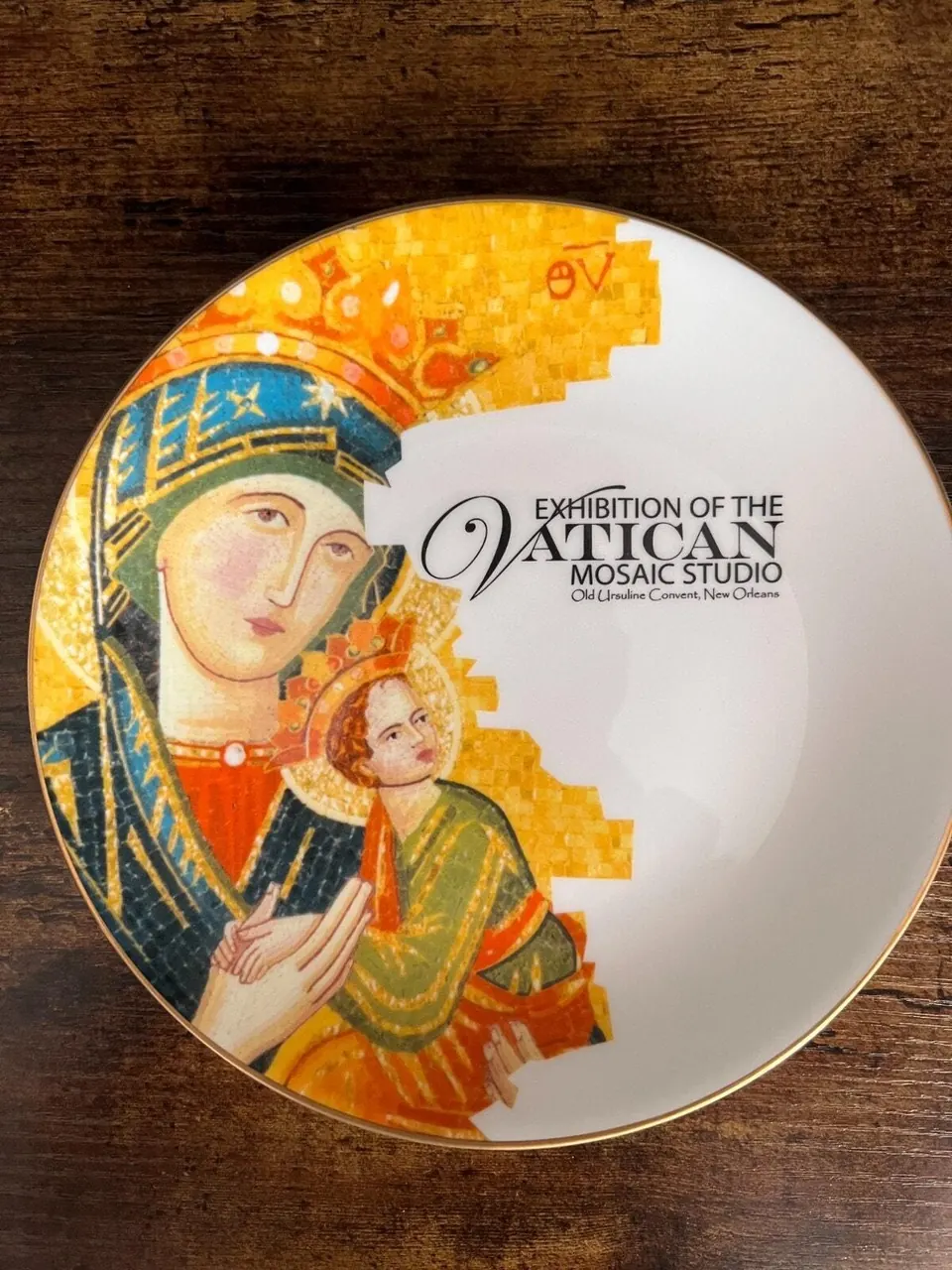
My eye went straight to the gold. It breaks into little squares along the edge of a blue veil, and farther down they get tangled up in the folds of a child’s clothes. I wanted to know whether I could feel the squares with my thumbnail. Then I read the other half of the plate. The picture had an address in New Orleans.
How the Vatican mosaics got to New Orleans
The plate names an exhibition of the Vatican Mosaic Studio at the Old Ursuline Convent. That show ran in New Orleans in 2007. The city’s tourism bureau reported 55,000 visitors by the time it closed on June 1. Monsignor Crosby Kern told a reporter he had asked why the mosaics hadn’t traveled. The answer he got was that nobody had asked. It’s a fine thing to discover after you’ve already gone all the way to Rome. New Orleans exhibition figures and Doug MacCash’s 2007 report
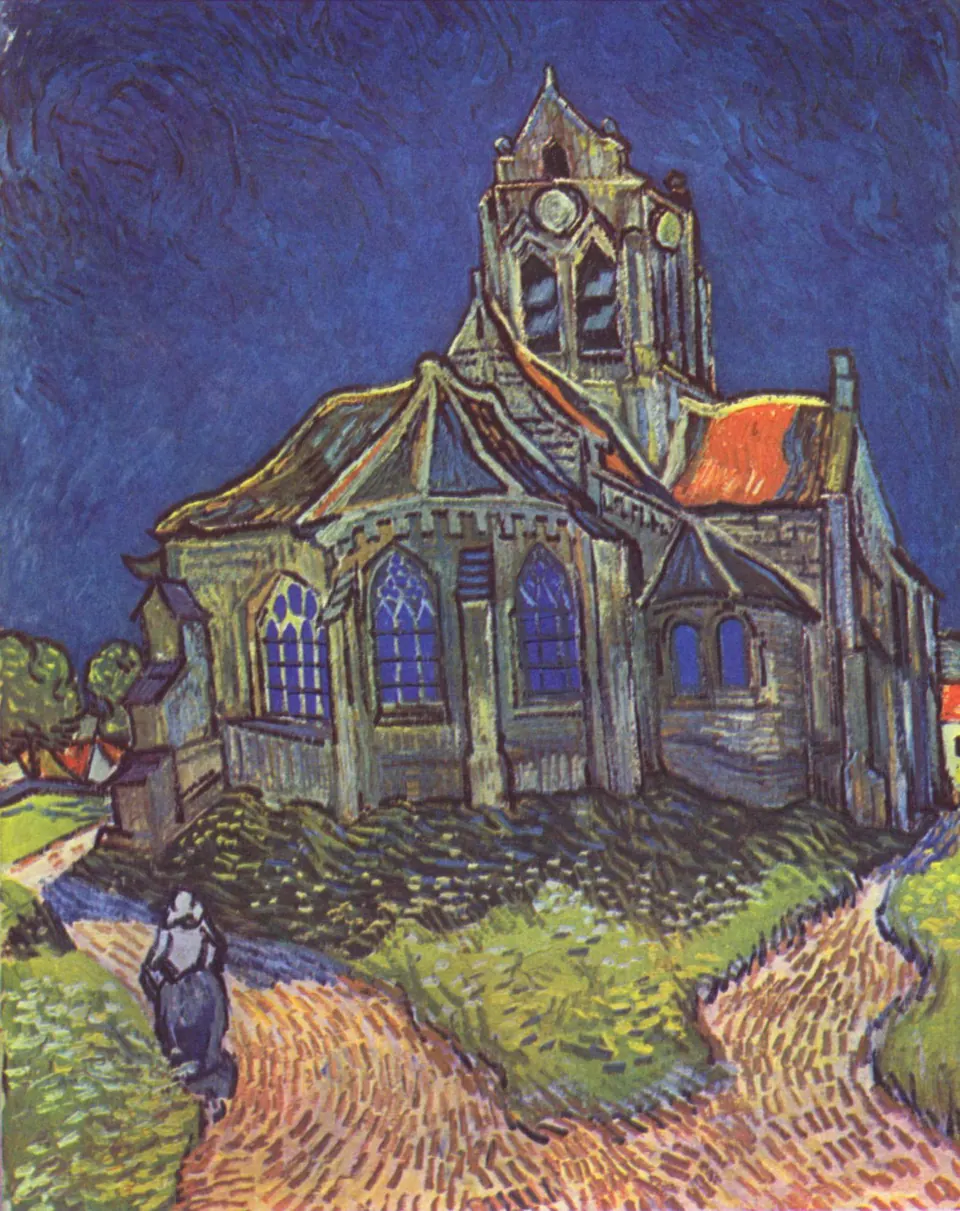
Kern’s favorite piece in that report was a Van Gogh. The studio had taken The Church at Auvers and worked the painting’s marks in glass. I pulled up the painting and tried to choose a brushstroke I could turn into a rectangle. Start with the ochre path in front of the church. It swells and skitters as it heads up the hill. Then look at the wall, which seems to be bending out of the way of its own roof. At some point somebody had to sit there and decide what shape of glass would make a building lean like that. Musée d’Orsay painting record
The Vatican had a practical reason to get good at this. Humidity was damaging painted altarpieces in St. Peter’s, and by the late seventeenth century work was underway to reproduce them in mosaic. The studio says the search for the right colors led to roughly 28,000 shades of enamel. Next time I’m trying to pick a white for the kitchen, I’ll think of that and get on with it. St. Peter’s Basilica on the Mosaic Studio
The Caverswall mark is on the back
Turn the plate over and you get the other half of the story. The back says Caverswall and English Fine Bone China. It’s numbered 619 of 1,500. Put the two sides together and you have a numbered English exhibition plate with a mosaic image and a New Orleans address. I couldn’t match the Madonna and Child on the face to a named mosaic in the exhibition. I’d keep the question open until I found an exhibition catalogue or a label with the image credit.
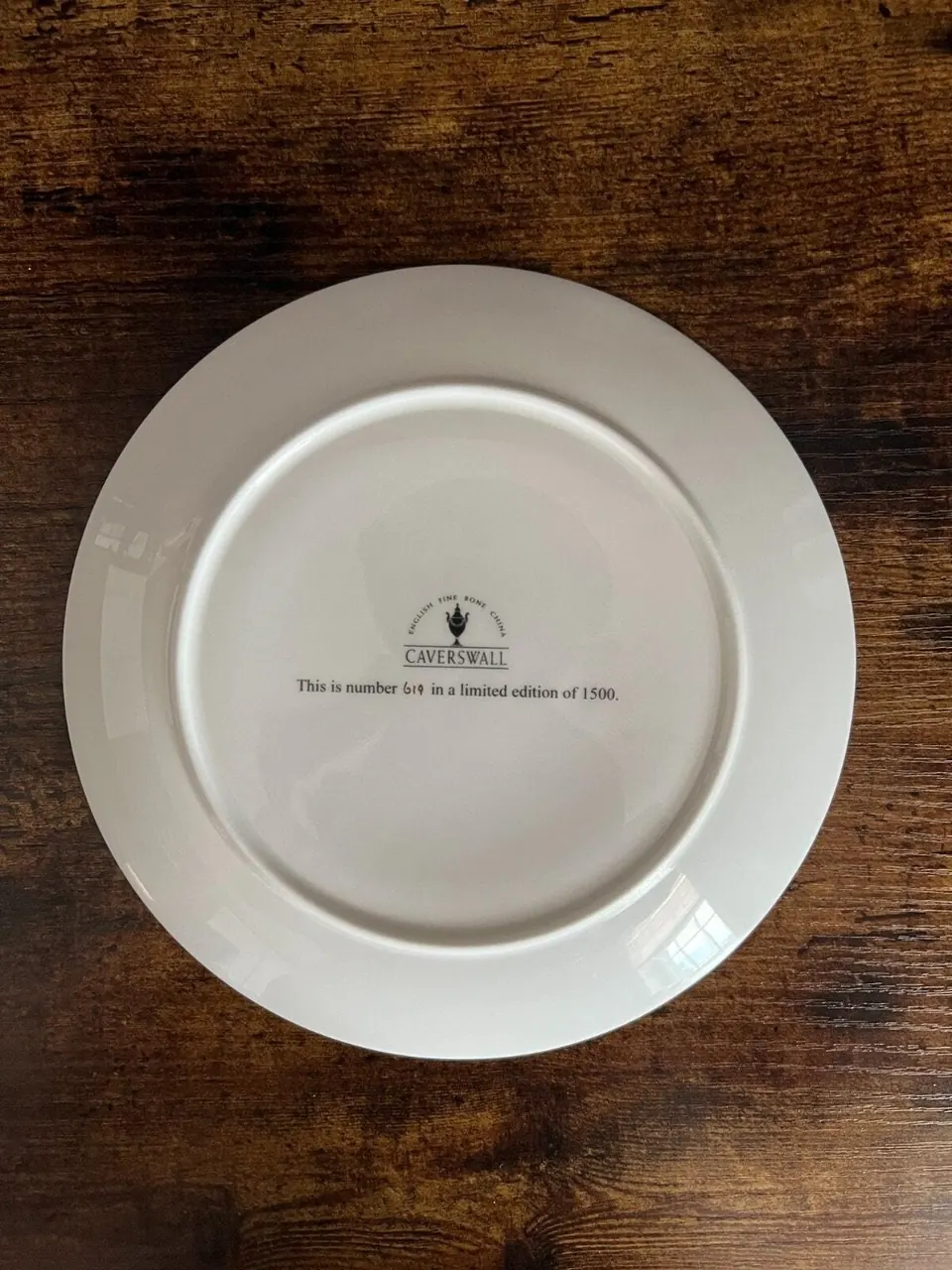
If you have a plate like it, give What’s It Worth? both faces. In Dive Deeper I’d ask, What would help identify the image, and which marks should I use to find another copy of this plate? Those are two different searches. The exhibition got me to Van Gogh. The backstamp is what would get me to the next plate. Another find that made more sense from the back