
I opened The Bluejackets’ Manual expecting to learn something about the sea. On page sixteen, I learned I had been making my bed with an embarrassingly small number of knots.
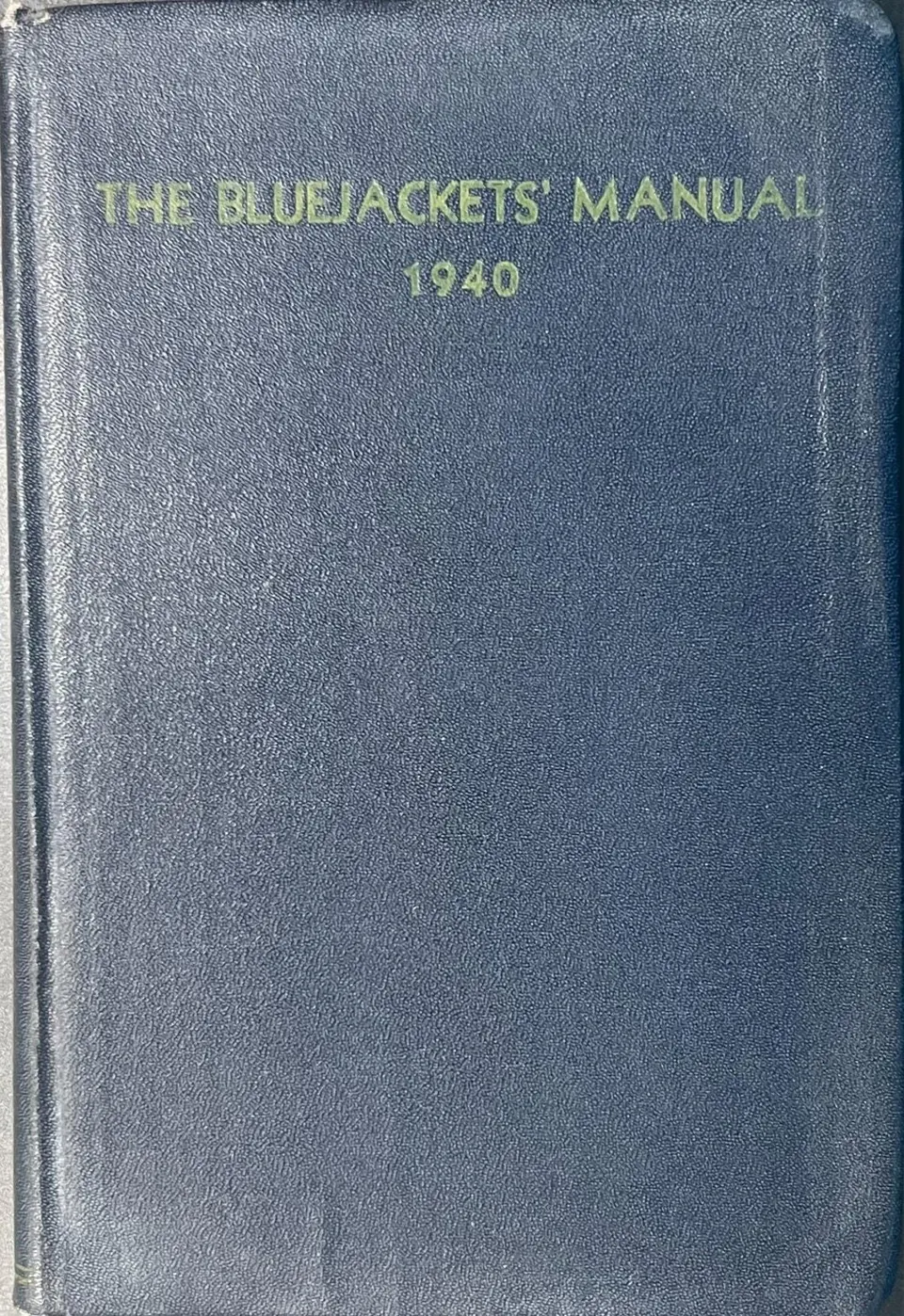
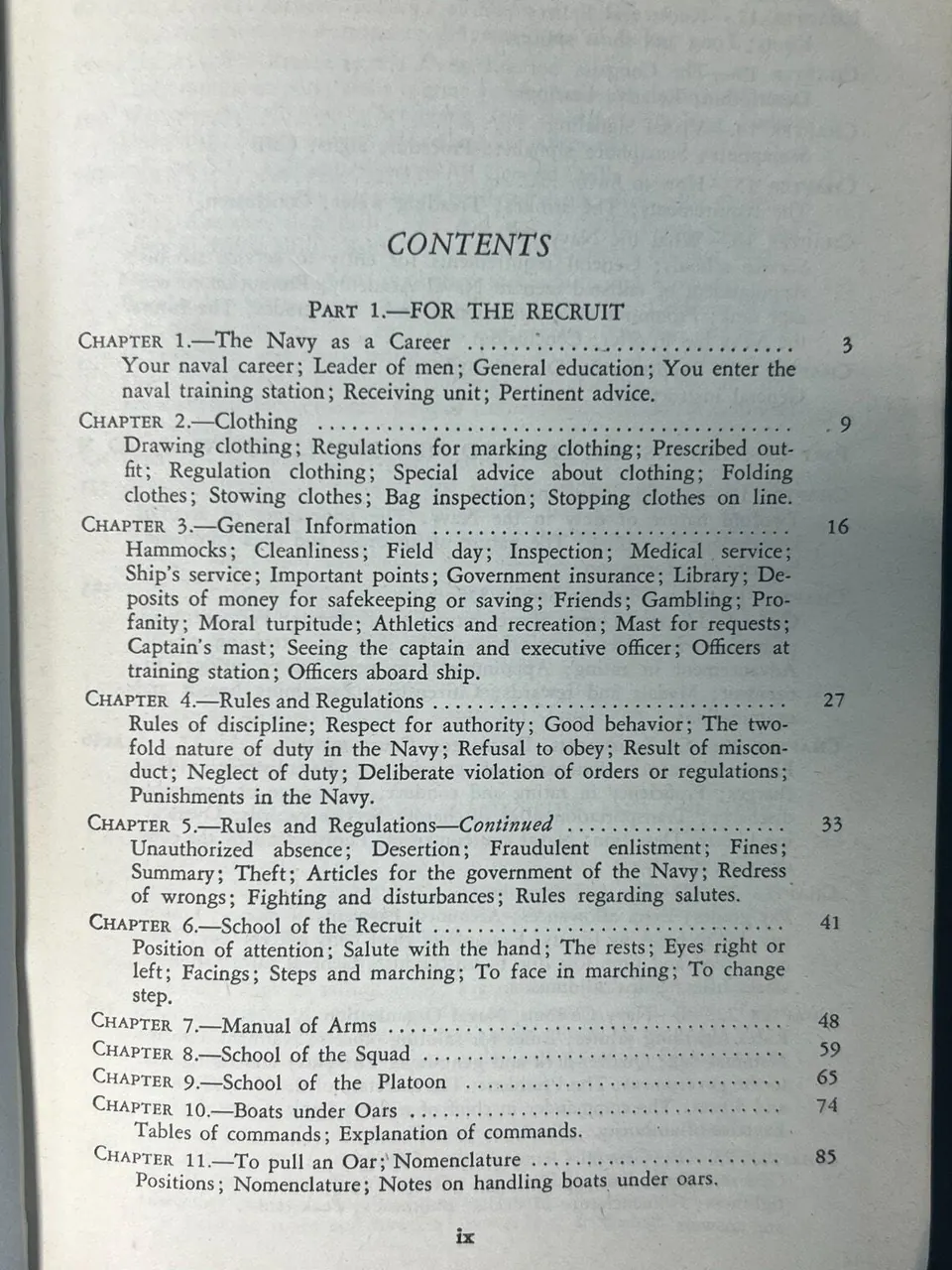
The blue cover says 1940. Inside, the U.S. Naval Institute calls it the tenth edition and gives the first part of the book to the recruit. The contents start with a career in the Navy, followed by an entire chapter on clothing. Then comes a chapter where you can learn what to do with your hammock, where to put your savings, and what the Navy has to say about your choice of friends. You could arrive knowing how to sail and still need most of this book. Digitized 1940 tenth edition
In the morning, the bed had to go somewhere
At home you can leave the bed unmade and shut the door. On a ship, the room has other plans for the space. The manual expects the recruit to lash his bedding into a bundle and air it at least once a week if the weather allows. There’s a bugle call for airing bedding. When the hammocks go up along the rail, the book says to leave no gaps, which it calls “holidays.” Even the empty spaces had to be accounted for. The same passage appears in the 1943 edition. Hammock passage from the 1943 manual (PDF)
Then I found a 1944 drawing by the Navy artist Mitchell Jamieson. He drew a sailor asleep in a hammock under a beam on deck. The Naval History and Heritage Command explains that crowded troop and cargo ships could run short of fixed bunks. Whatever the sailor was supposed to do with the hammock when he got out of it, I hoped he got every minute he could before then. Mitchell Jamieson’s Seaman Sleeping in Hammock on Deck
Why does a 1940 Bluejackets’ Manual have a 42 in it?
The copyright page in this copy carries the little line 12-4-42—50 OPC. The digitized copy also says 1940 and tenth edition, but its code begins 10-42. The two codes make a later wartime printing plausible. I’d keep the cover date and the code together in a description and leave the exact printing date open. Title and copyright pages of the digitized copy
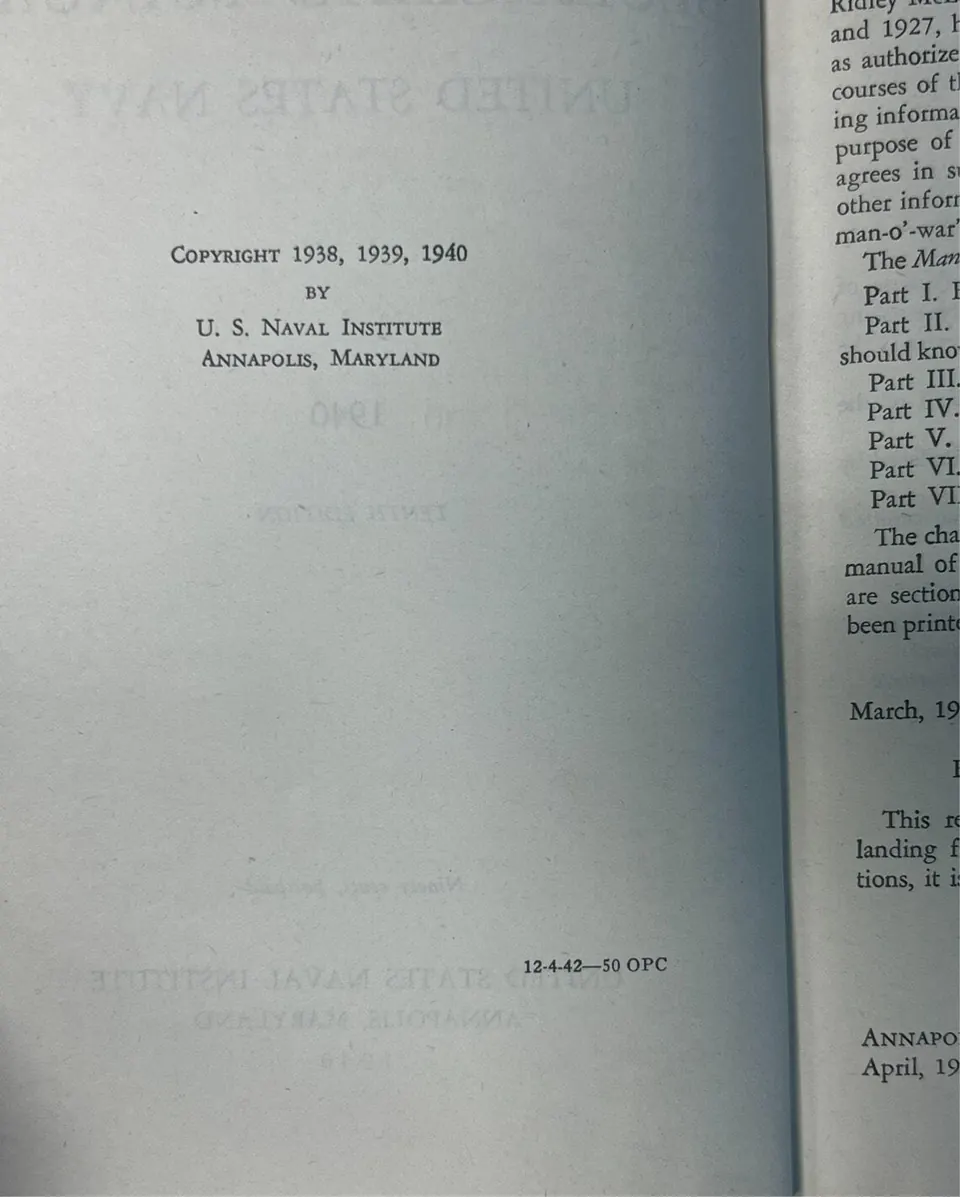
In What’s It Worth?, I’d send the title page and the code together, then ask in Dive Deeper, How would you describe this copy if you had to put the date on a little card? A bookshop would need that answer before putting it alongside another tenth edition. I still think the little card ought to give page sixteen a mention. How to read the clues on a copyright page