
A first edition can hide in plain sight. So can a reprint carrying a first edition’s date. If you have thirty seconds with an old book at a sale, turn past the cover to the title page, then turn that page over. The publisher, edition statement, and printing line are the clues you want to take home.
1. Start with the title page and its reverse
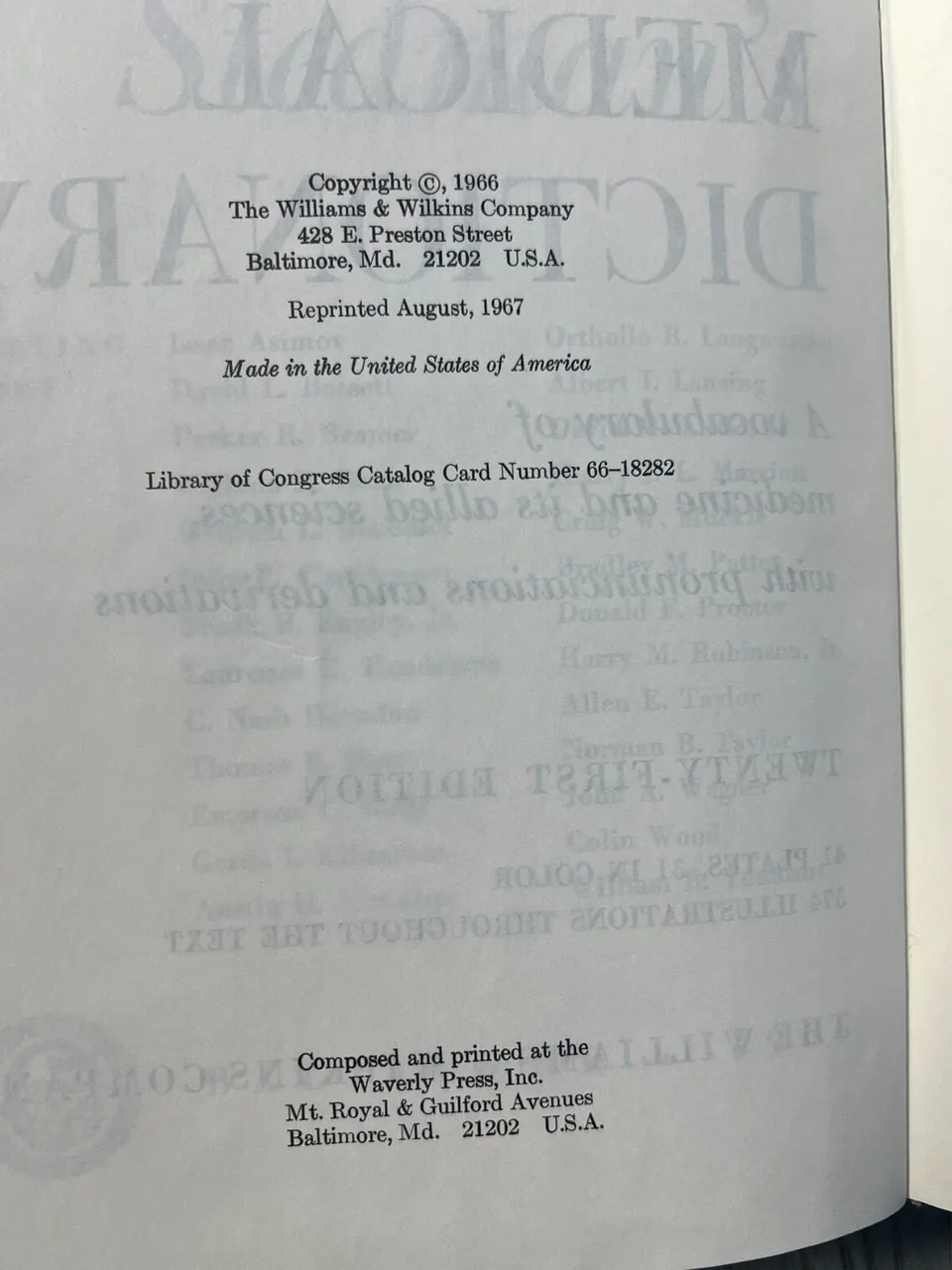
Take one photo of the title page and one of the entire copyright page. The title page gives you the publisher and often the city. The reverse may give you the edition, a line such as Reprinted August, 1967, or a string of numbers. On many modern books, the lowest number in the printing sequence tells you the impression. Check the publisher’s convention when a first printing matters. Some publishers use other marks, and older books often have no number line at all. Smithsonian Libraries’ guide to old books · Publisher-by-publisher conventions
2. Read the dates as separate clues
Our three books make a useful shelf to practice on.
- Ansel Adams’s Examples has an explicit first-edition statement dated 1983. The imprint and ISBN give you something concrete to compare with a catalog.
- Stedman’s Medical Dictionary puts 1966 on the credits and copyright pages. This copy also tells you it was reprinted in August 1967.
- The Walter J. Black Shakespeare names one publisher on the title page and credits a 1925 copyright to another. The copyright gives you a lead, and the printing year of that copy is still open.
3. Compare the actual book
Check the imprint, edition and printing, then look for the jacket, missing pages, a faded spine, or a signature. Two listings can use the same title for very different copies. A useful library catalog record or bibliography describes details you can compare. If you’re checking value, find asking prices for copies with similar printing and condition. The price on a listing tells you what someone is asking.
In What’s It Worth?, add the cover, title page, and its reverse to one scan. In Dive Deeper ask, What does each date refer to, and what detail would distinguish this copy from an earlier printing? If the answer calls for another photo, take it before you put the book down. Otherwise you’ll be halfway home wondering whether there was a line underneath the line you read.