
Looking at old family papers through What’s It Worth? sent me down a rabbit hole about how German used to be written. I could recognize the year in one handwritten page. The letters around it looked nothing like the German I’m accustomed to seeing today. That led me to Kurrent, an older German cursive. Once I knew what to look at, I could start with a word I could read. Hochzeits-Gruss means wedding greeting.
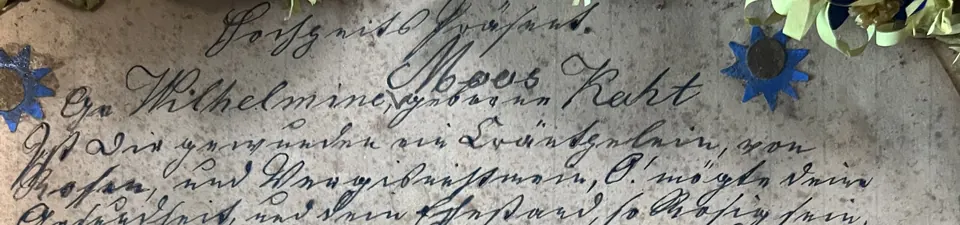
Start with a date and a word you can read
Even a fluent German reader may need a chart for Kurrent. Look for a year in numerals, a heading or a place name you recognize. A date can suggest which letter chart to try. On a church certificate or register, the printed headings and handwritten entries can use different forms, so compare handwriting with handwriting. Photograph the whole sheet before you zoom in. The heading, margins, seals, and any writing on the back can help place a line you can only partly read. Archion’s church register examples and script exercises
Make an alphabet from the page itself
Find a letter you can read in one word, then see how the same person wrote it elsewhere. On the wedding greeting, a possible surname appears in the address and again after Grossmutter, or grandmother. Put those two stretches side by side. The capital is still hard to settle. The repeated word gives you two chances to see where the pen changes direction. Keep the alternatives in your transcription, right where the doubtful letter is. Searching a family record under two plausible spellings can be more useful than choosing one early. University of Zurich guide to historical scripts
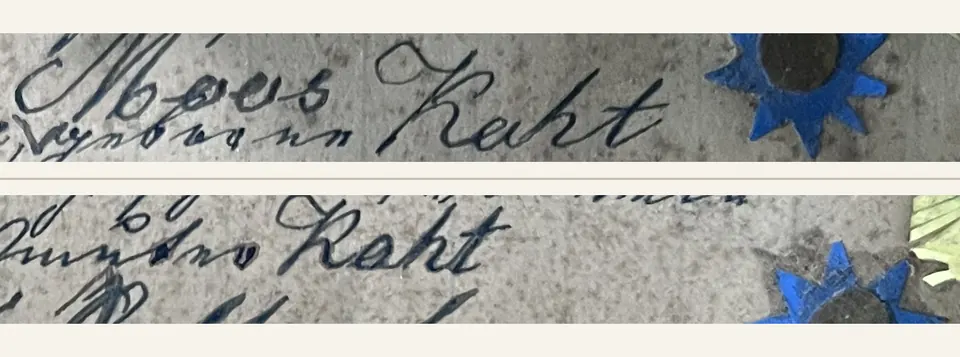
Transcribe it before you translate it
Write down the original spelling first. Put a question mark beside a guess and keep a line break where the writer put one. Then translate what you can. If it is a family record, search by place and year as well as name. A second document can give you another spelling, or a clerk whose handwriting is kinder to you.
In What’s It Worth?, try adding the whole page and a close-up of your hardest line. In Dive Deeper, ask it to transcribe just that line and offer alternate readings for the letters it can’t settle. Use the heading and the other words you can read to check the suggested transcription. Read the full story of the wedding greeting and the actual confirmation certificate found with it.